What Is a Narcissistic Relationship?
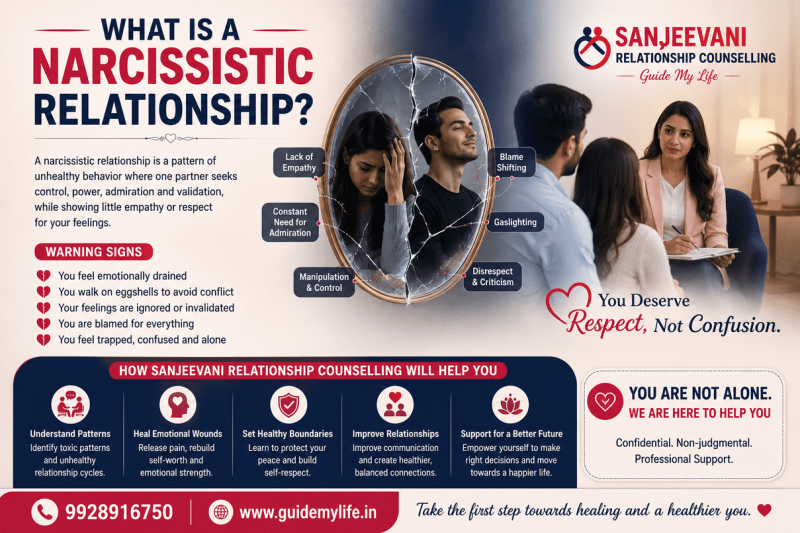
A narcissistic relationship is often characterised by an unhealthy pattern in which one partner consistently seeks control, admiration, attention, or validation while showing limited empathy toward the other person’s feelings. It is important to understand that being selfish, emotionally difficult, or inconsiderate does not automatically mean someone has Narcissistic Personality Disorder. Only a qualified mental-health professional can make such a diagnosis. However, recognising repeated patterns of manipulation, criticism, emotional control, and lack of respect can help a person understand whether their relationship is becoming unhealthy.
Sanjeevani Relationship Counselling can provide a safe, confidential, and non-judgmental space for individuals who feel trapped in a narcissistic or emotionally unhealthy relationship. Counselling can help you understand patterns such as manipulation, gaslighting, emotional control, blame-shifting, criticism, and repeated cycles of affection and rejection.
With professional guidance, you can learn to recognise unhealthy relationship patterns, rebuild self-esteem, establish healthy boundaries, manage anxiety and stress, and regain confidence in your own decisions. Instead of feeling confused or constantly questioning yourself, counselling can help you understand your emotions and decide what is healthiest for your future.
Understanding Love Traps in Relationships
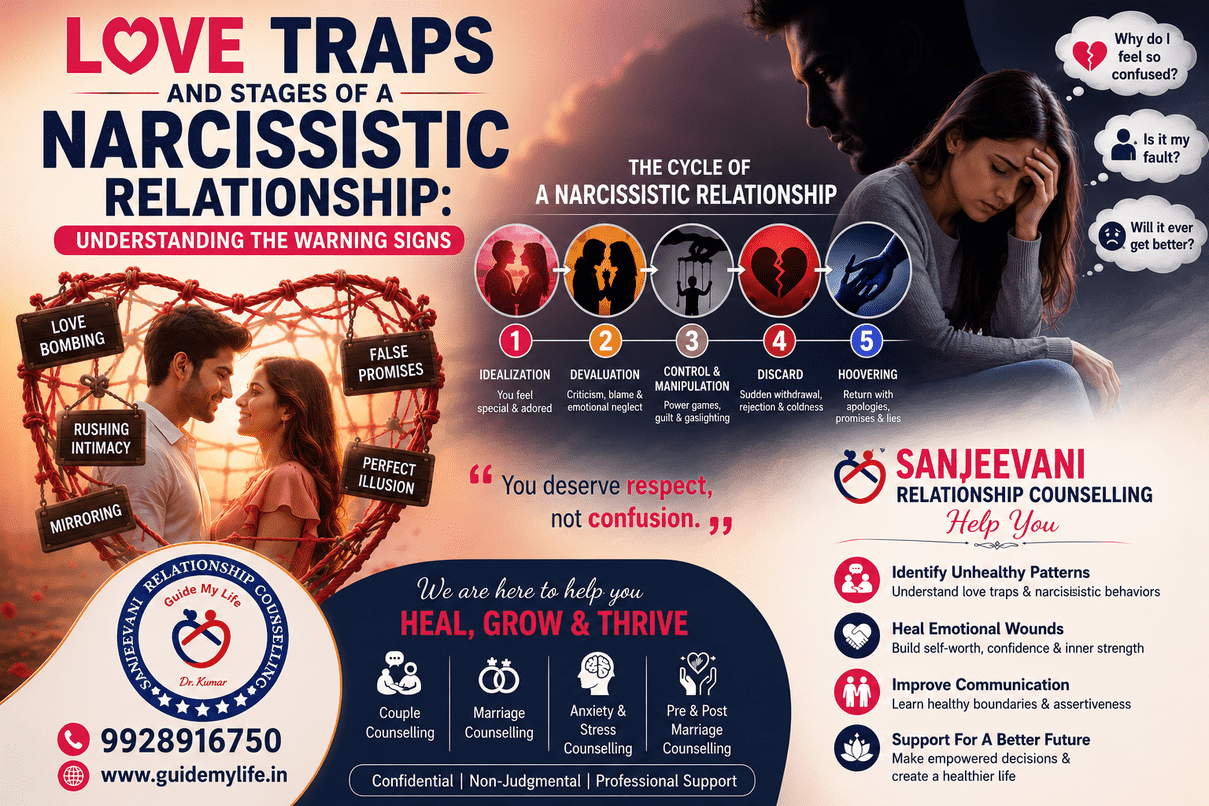
Some unhealthy relationships can begin with extremely intense affection and attention. The early phase may feel exciting because the person appears unusually caring, romantic, understanding, and emotionally available. These behaviours can create a strong attachment before the individual has enough time to understand their partner’s personality and behaviour. Love traps can therefore make it difficult to recognise warning signs later, particularly when the relationship begins to change.
Love Bombing and Excessive Attention
Love bombing refers to an unusually intense display of affection, compliments, messages, gifts, promises, or attention, particularly during the early stages of a relationship. The person may constantly communicate with their partner, make grand romantic statements, or talk about a lifelong future very quickly. Affection and romance are normal parts of a healthy relationship, but when excessive attention is later followed by manipulation, criticism, or control, it can become part of an unhealthy relationship pattern.
Mirroring and Creating a Perfect Connection
Mirroring can involve presenting yourself as extremely similar to another person by adopting their interests, opinions, values, hobbies, or relationship expectations. In the beginning, this can make two people feel as though they have discovered a perfect match. While genuine compatibility is healthy, an unusually strong impression of having exactly the same interests and goals can sometimes make a person emotionally attached before they have had enough time to understand their partner’s authentic behaviour.
Rushing the Relationship
Another potential warning sign is moving through major relationship milestones unusually quickly. A partner may start talking about marriage, living together, lifelong commitment, or other major decisions before the couple has had sufficient time to understand each other’s personalities, boundaries, values, and behaviour during difficult situations. Healthy relationships generally allow partners enough time to build trust naturally rather than creating pressure to make major commitments immediately.
Stage 1: Idealisation
During the idealisation stage, the relationship may appear almost perfect. The partner may be extremely affectionate, attentive, complimentary, and interested in everything the other person says. You may feel deeply understood, appreciated, and emotionally connected. This stage can create a strong attachment because the positive attention feels rewarding and reassuring. The concern arises when this intense idealisation later changes into criticism, rejection, manipulation, or emotional withdrawal.
Stage 2: Devaluation
The devaluation stage can begin when the intense affection starts decreasing and criticism becomes more noticeable. A partner who previously praised you may begin making negative comments about your appearance, personality, career, family, friends, or decisions. The other person may become confused and start wondering what they did wrong. They may try harder to regain the affection they experienced during the beginning of the relationship, which can keep them emotionally invested despite increasing distress.
Gaslighting and Emotional Manipulation
Gaslighting is a form of psychological manipulation in which someone repeatedly denies, distorts, or dismisses another person’s experiences in a way that can make them question their memory, feelings, or perception. A partner may deny saying something that was clearly said, change the details of an argument, or repeatedly tell the other person that they are overreacting. Not every disagreement is gaslighting, but repeated attempts to undermine someone’s confidence in their own perception can be a serious warning sign.
Stage 3: Control and Isolation
As an unhealthy relationship progresses, controlling behaviour may become increasingly visible. A partner may attempt to influence who you meet, where you go, what you wear, who you communicate with, or how you spend your time and money. Sometimes this behaviour is presented as concern, love, or jealousy. However, healthy relationships allow both partners to maintain personal boundaries, friendships, independence, and individual identities. Persistent attempts to control or isolate a partner should therefore be taken seriously.
Stage 4: Discard or Emotional Withdrawal
In some unhealthy relationship patterns, a partner may suddenly become cold, distant, or rejecting after a period of intense affection. This emotional withdrawal can be particularly painful because the person may remember how loving the relationship felt initially. They may struggle to understand why their partner’s behaviour has changed so dramatically. This contrast between intense affection and sudden rejection can create confusion and may make it difficult for the individual to emotionally detach from the relationship.
Stage 5: Hoovering and Returning to the Relationship
Hoovering refers to attempts to bring someone back into a relationship after emotional withdrawal, rejection, or separation. The person may return with apologies, promises, affection, emotional messages, or claims that everything will change. Because the other partner may still remember the positive beginning of the relationship, these promises can create hope that the relationship will finally become healthy again. However, if the underlying behaviours remain unchanged, the same cycle of affection, conflict, withdrawal, and reconciliation may continue.
Why Is It Difficult to Leave a Toxic Relationship?
Leaving an unhealthy relationship is not always as simple as deciding to walk away. Emotional attachment, memories of happy moments, fear of loneliness, financial dependence, children, social expectations, and repeated promises of change can all influence a person’s decisions. Someone may continue hoping that their partner will return to the loving person they were at the beginning. This is why telling someone to simply “move on” may not address the emotional complexity of their situation.
How Can a Narcissistic Relationship Affect Emotional Well-Being?
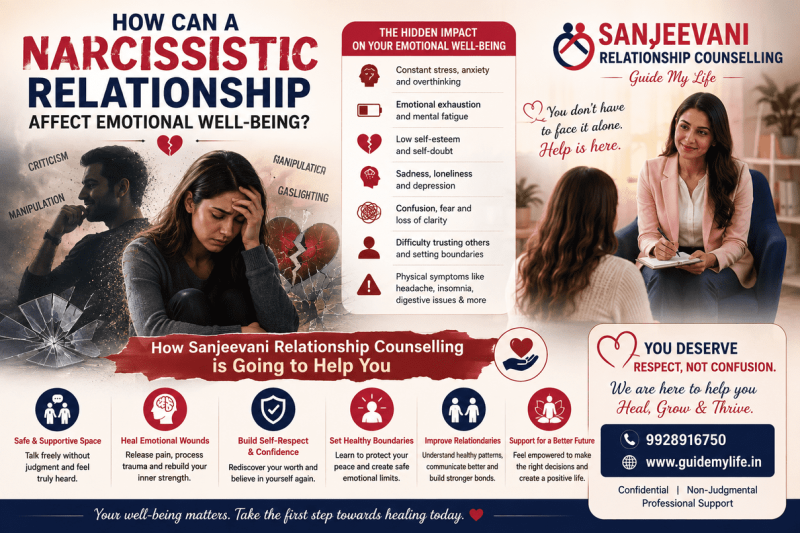
Being involved in a long-term unhealthy relationship can affect a person’s emotional well-being and confidence. Constant criticism, manipulation, uncertainty, and conflict may contribute to self-doubt, emotional exhaustion, relationship anxiety, low self-esteem, and difficulty trusting others. Some individuals may also experience persistent stress and find it difficult to make decisions independently. Sanjeevani relationship professional stress counselling can provide a supportive environment for understanding these emotional responses and developing healthier coping strategies.
Anxiety Caused by Relationship Problems
Relationship uncertainty can sometimes contribute to anxiety. A person may constantly worry about losing their partner, being rejected, experiencing another argument, or not knowing what will happen next. Repeated conflict, emotional manipulation, separation concerns, and family pressure may also increase emotional distress. If relationship-related anxiety is interfering with everyday life, searching for an anxiety session near me can be one way to explore professional support like sanjeevani stress management counselling and understand the emotional concerns involved.
When Should You Contact a Couple Counsellor?
A Sanjeevani relationship couple counsellor can help partners understand recurring communication problems, emotional needs, relationship expectations, and conflict patterns. Professional counselling can be useful when both partners are willing to communicate and work toward healthier relationship dynamics. However, if a relationship involves serious threats, intimidation, physical violence, coercive control, or significant emotional abuse, individual professional support and appropriate safety planning may be more suitable than conventional couple counselling.
Can Relationship Counselling Help After Emotional Abuse?
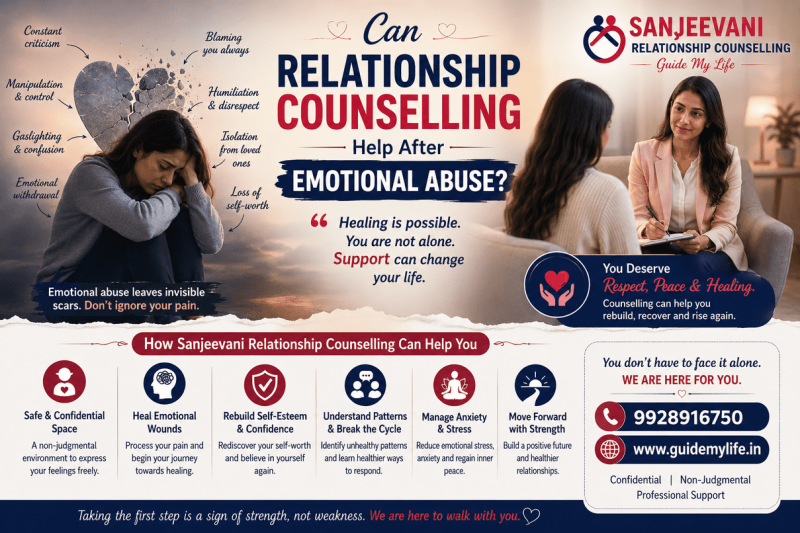
Recovering from a manipulative or emotionally unhealthy relationship can take time. Relationship counselling or individual counselling may help a person understand unhealthy relationship patterns, rebuild confidence, establish boundaries, and make thoughtful decisions about their future. The purpose of counselling should not be to blame someone for remaining in a difficult relationship. Instead, professional support can help the individual understand their experiences and identify healthier patterns for future relationships.
Signs of a Healthier Relationship
A healthy relationship does not mean that couples never disagree. Differences of opinion are normal, but partners should generally be able to communicate without consistently using fear, manipulation, humiliation, or control. Mutual respect, emotional safety, honest communication, personal boundaries, accountability, independence, and willingness to repair conflicts are important elements of a healthier relationship. Love should allow both individuals to maintain their identity and feel respected rather than requiring one person to continuously sacrifice their emotional well-being.
How Sanjeevani Relationship Counselling Can Help
Sanjeevani Relationship Counselling provides professional support for individuals and couples dealing with communication problems, trust issues, emotional distance, relationship stress, anxiety, and other relationship concerns. A supportive counselling environment can help individuals express their concerns openly and understand the patterns affecting their relationships. Whether someone needs relationship counselling, marriage counselling, stress counselling, or individual emotional support, professional guidance can help them approach difficult situations with greater clarity.
Looking for the Best Couple Counsellor Near Me?
When searching for the best couple counsellor near me, it is important to consider more than just location. Experience, counselling approach, confidentiality, communication style, and the comfort level of both partners are important factors when choosing professional support. A suitable couple counsellor should provide a neutral and respectful environment where both individuals can express themselves without unnecessary judgment. Online counselling can also be considered by couples who live in different cities or prefer the convenience of remote sessions.
Final Thoughts
The stages of a narcissistic relationship can sometimes involve intense affection, idealisation, devaluation, manipulation, control, emotional withdrawal, and repeated attempts at reconciliation. Not every difficult relationship follows this exact pattern, and these behaviours should not be used to diagnose someone with a personality disorder. However, recognising persistent unhealthy patterns can help individuals take their emotional well-being seriously.
If you feel constantly confused, criticised, controlled, emotionally exhausted, or uncertain about your relationship, professional support can provide a safe space to explore your concerns. Whether you are looking for relationship counselling, marriage counselling, stress counselling, a couple counsellor, or an anxiety session near me, seeking appropriate professional guidance can be an important step toward healthier boundaries, stronger self-confidence, and healthier relationships.