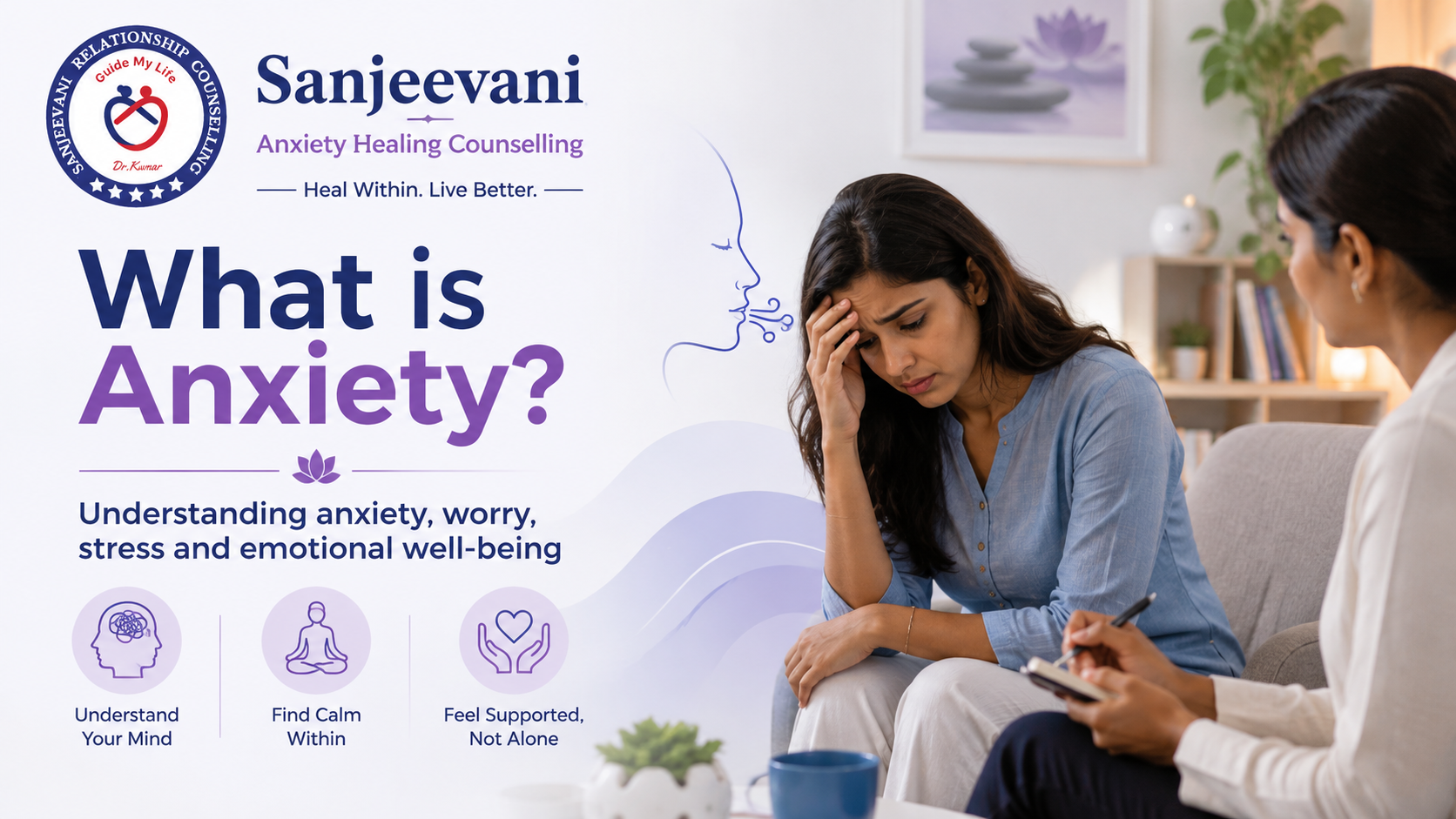
What is Anxiety?
Anxiety is a common emotional response to stress, uncertainty, or situations that feel threatening. While occasional worry is a normal part of life, persistent or excessive anxiety can begin to interfere with a person’s studies, work, relationships, sleep, and everyday activities.At Sanjeevani Anxiety Healing Counselling, we provide professional and confidential counselling support for individuals experiencing anxiety, excessive worry, panic symptoms, stress, fears, and related emotional difficulties. Our approach focuses on understanding the underlying concerns and developing practical coping strategies suited to each individual.Anxiety can affect people differently. Some may experience constant worrying, while others may primarily notice physical symptoms such as a racing heartbeat, breathlessness, sweating, dizziness, or difficulty sleeping.
Important points about anxiety:
- Anxiety can occur at different stages of life and may have different causes.
- Occasional anxiety is normal, but persistent anxiety may require professional support.
- Physical symptoms can sometimes make anxiety feel like a medical emergency.
- Avoiding situations because of anxiety can gradually reinforce fear and worry.
- With appropriate counselling and therapy, many people learn to manage their symptoms effectively.
Tip: Seeking counselling early can make it easier to understand anxiety patterns and develop healthier ways of responding to stressful situations. Anxiety can involve emotional, physical, cognitive, and behavioural symptoms. The intensity and combination of symptoms can vary from one person to another.

Physical Symptoms
People experiencing anxiety may notice a fast or pounding heartbeat, chest tightness, shortness of breath, dizziness, sweating, trembling, nausea, muscle tension, headaches, or tingling sensations.
Emotional Symptoms
Common emotional experiences include persistent nervousness, fear, restlessness, irritability, feeling overwhelmed, or a constant sense that something bad might happen.
Cognitive Symptoms
Anxiety can also affect the way a person thinks. Excessive worrying, negative predictions, difficulty concentrating, overthinking, and imagining worst-case outcomes are common.
Behavioural Symptoms
Some people begin avoiding particular places, people, responsibilities, social situations, travel, or activities because they are worried that something uncomfortable or frightening may happen.
Sleep-Related Symptoms
Persistent anxiety may make it difficult to fall asleep, stay asleep, or feel rested. Racing thoughts at bedtime are also common.Recognising these symptoms can be an important first step toward seeking appropriate anxiety counselling and support.
What Can Cause or Trigger Anxiety?
Anxiety usually does not have one single cause. It can develop through a combination of psychological, biological, social, and environmental factors.
Common factors that may contribute to anxiety include:
- Work or academic pressure: Deadlines, examinations, performance expectations, and career uncertainty can increase stress.
- Relationship difficulties: Conflict, communication problems, separation, or uncertainty in relationships may contribute to anxiety.
- Major life changes: Relocation, marriage, financial difficulties, job changes, or other significant transitions can feel overwhelming.
- Stressful or traumatic experiences: Difficult life experiences may increase fear, worry, and emotional sensitivity.
- Family history: Some individuals may have a greater vulnerability to anxiety because of family or biological factors.
- Overthinking and negative thought patterns: Repeatedly anticipating negative outcomes can maintain the anxiety cycle.
- Social situations: Fear of judgement, embarrassment, rejection, or criticism can contribute to social anxiety.
- Health-related worries: Excessive concern about physical sensations or possible illness can sometimes increase anxiety.
Understanding an individual’s personal triggers allows a counsellor to develop a more suitable and personalised treatment approach.
How is Anxiety Diagnosed?
There is no single blood test or scan that can independently confirm an anxiety disorder. Assessment generally involves understanding the person’s symptoms, thoughts, behaviours, personal history, and the effect anxiety is having on everyday life.During an anxiety counselling assessment suggested by dr kumar, a professional may explore:
Personal and Clinical History
The counsellor discusses when the symptoms started, how frequently they occur, what situations make them worse, and how they affect daily functioning.
Anxiety Symptoms
The nature and intensity of physical, emotional, and cognitive symptoms are assessed to understand the individual’s concerns more clearly.
Psychological Assessment
Depending on the situation, appropriate screening or assessment tools may be used to understand anxiety severity and related emotional concerns.
Differential Assessment
Anxiety symptoms can overlap with stress, panic attacks, depression, phobias, obsessive thoughts, and other psychological concerns. Identifying the underlying pattern helps determine the appropriate counselling approach.
Daily-Life Impact
A professional may also consider how anxiety is affecting sleep, work, education, relationships, social activities, and other responsibilities.
Important: Physical symptoms such as chest pain, severe breathlessness, fainting, or other concerning symptoms should not automatically be assumed to be anxiety. Medical evaluation may be appropriate to rule out physical causes.
What Therapy Options are Available for Anxiety?
Anxiety counselling generally focuses on helping individuals understand their thought patterns, emotional responses, triggers, and behaviours while developing healthier coping mechanisms.
Cognitive Behavioural Therapy (CBT)
CBT can help individuals identify unhelpful thinking patterns and gradually replace them with more balanced and practical ways of thinking. It can be particularly useful for excessive worry and anxiety-related avoidance.
Psychoeducation
Understanding what anxiety is, why symptoms occur, and how the anxiety cycle works can reduce confusion and help individuals feel more in control.
Relaxation and Breathing Techniques
Counselling may include techniques such as controlled breathing, relaxation exercises, mindfulness, and other strategies that can help manage physical symptoms of stress and anxiety.
Exposure-Based Approaches
For certain anxiety concerns and fears, gradual and structured exposure to feared situations may be incorporated into therapy under professional guidance.
Stress Management
Counselling can help individuals identify sources of stress and develop healthier routines, coping strategies, boundaries, and problem-solving skills.
Individualised Counselling
Every person’s anxiety is different. Counselling may therefore be adapted according to the individual’s symptoms, circumstances, relationships, lifestyle, and emotional needs.
At Sanjeevani Anxiety Counselling, the focus is on providing a supportive, confidential, and non-judgemental environment where individuals can discuss their concerns openly and work toward better emotional wellbeing.
When Should You Consider Professional Anxiety Counselling?
Not every stressful period requires professional intervention. However, counselling may be helpful when anxiety becomes persistent or begins interfering with everyday life.
Consider seeking professional support if:
- You experience excessive worry regularly.
- Anxiety is affecting your sleep or concentration.
- You are avoiding work, education, social situations, or important activities.
- Physical anxiety symptoms occur frequently.
- You find it difficult to control negative or fearful thoughts.
- Anxiety is affecting your relationships or communication.
- You frequently feel overwhelmed, restless, or on edge.
- Your anxiety has continued despite attempts to manage it yourself.
- Anxiety is occurring alongside symptoms of depression or significant emotional distress.
Early support can help prevent unhealthy avoidance and coping patterns from becoming more established.
How Sanjeevani Anxiety Counselling Can Help
Sanjeevani Anxiety Counselling provides professional counselling support for individuals dealing with anxiety, excessive worrying, stress, fears, panic-related concerns, and emotional difficulties.
Our counselling approach focuses on understanding the individual’s concerns rather than applying a one-size-fits-all solution. Sessions provide a safe and confidential space where clients can discuss their thoughts, emotions, relationships, stressors, and everyday challenges without judgement.
Depending on the individual’s needs, counselling may focus on managing anxious thoughts, improving emotional regulation, developing coping strategies, reducing avoidance, handling stress, improving confidence, and building healthier behavioural patterns.
Online counselling can also make professional support accessible to individuals who prefer to attend sessions from the comfort of their own home.
At Sanjeevani, we believe that asking for emotional support is not a weakness. Counselling can be a positive step toward understanding yourself better and developing healthier ways of managing life’s challenges.

Frequently Asked Questions
Can anxiety be treated with counselling?
Yes. Counselling can help many individuals understand the causes and patterns behind their anxiety and learn practical strategies to manage anxious thoughts, emotions, and behaviours. The appropriate approach depends on the individual’s symptoms and circumstances.
What are the common causes of anxiety?
Anxiety can be associated with academic or work pressure, relationship difficulties, financial concerns, major life changes, stressful experiences, family factors, health worries, social concerns, and persistent negative thinking. Sometimes several factors can contribute at the same time.
How do I know if I need anxiety counselling?
If anxiety is persistent, difficult to control, or interfering with your sleep, work, studies, relationships, or daily activities, speaking with a qualified mental health professional may be beneficial.
Can anxiety cause physical symptoms?
Yes. Anxiety can produce physical symptoms such as a racing heartbeat, sweating, trembling, dizziness, muscle tension, nausea, and shortness of breath. However, new, severe, or concerning physical symptoms should be medically evaluated rather than automatically attributed to anxiety.
Does anxiety counselling work for overthinking?
Counselling can help individuals understand repetitive thought patterns and develop healthier ways of responding to uncertainty and negative thoughts. Techniques such as CBT, mindfulness, cognitive restructuring, and practical coping strategies may be used depending on the individual’s needs.
Is online anxiety counselling available?
Online counselling can be an accessible option for people who prefer remote sessions or cannot easily attend an in-person appointment. The suitability of online counselling depends on the individual’s needs and circumstances.
How long does anxiety counselling take?
There is no fixed number of sessions that works for everyone. The duration depends on the severity and nature of the anxiety, the individual’s goals, progress during counselling, and the therapeutic approach being used.
Is anxiety counselling confidential?
Counselling is generally conducted in a confidential and professional environment, subject to applicable ethical and legal limits. Clients can discuss their concerns openly and work with the counsellor to identify suitable strategies for their emotional wellbeing.